
Keep files, images, and screenshots of your work to create a document describing your completion of these and any observations or questions about each — create a pdf of this to upload for this exercise. You’ll just upload a .pdf this time, not a .zip.
- Complete this basic matplotlib tutorial page:
https://matplotlib.org/stable/tutorials/pyplot.html#sphx-glr-tutorials-pyplot-py
- Complete this page up through “reshaping and flattening.”
https://numpy.org/doc/stable/user/absolute_beginners.html
- Complete this basic matplotlib and numpy tutorial page:
https://www.tutorialspoint.com/numpy/numpy_matplotlib.htm
- Clone this repository: https://github.com/pattersone/ed
You can do this from the terminal (and a folder with the code will be created in the pwd where you run git clone):
git clone https://github.com/pattersone/ed
-
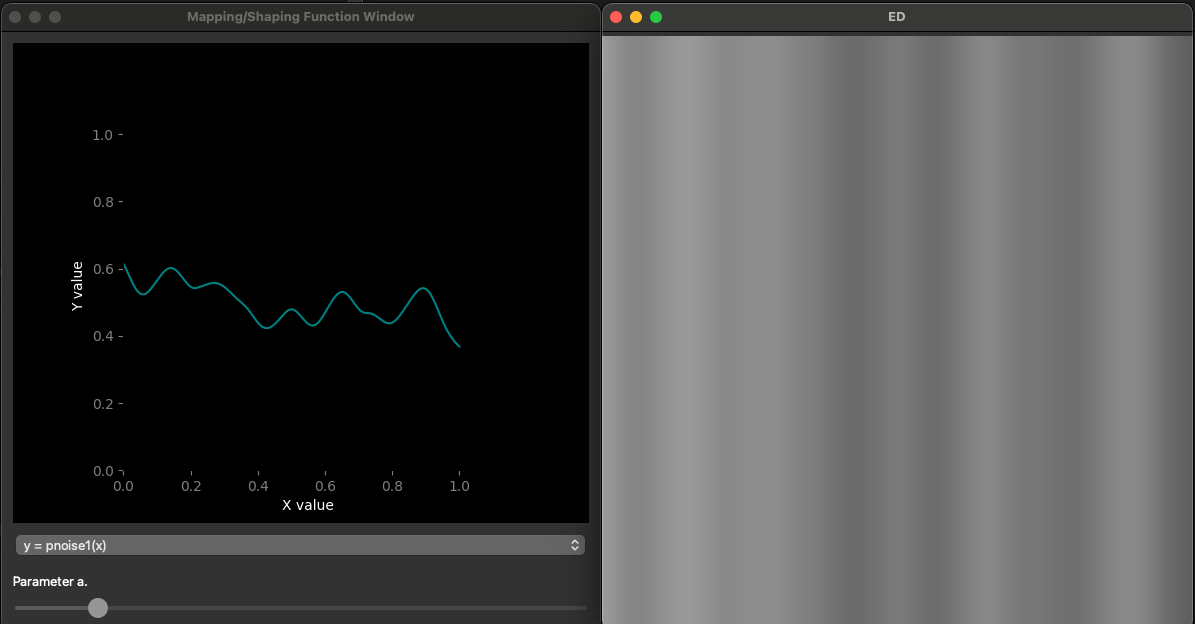
Start to look through the code we discussed in class to get a feel for it.
-
Try to do two small Numpy / Python examples by hand using linspace — the first to create something like “xcoords” in the code but with just 5 divisions, and the second to create something like “xycoords” in the code but with 5 x 5 divisions. Explain how np.linspace(), np.meshgrid(), and np.dstack() are used to create the [0, 1] intervals across x and y (like UV coordinates in a texture map) and how the functions operate on them.
-
Read through the “Algorithmic Drawing” sections of The Book of Shaders, paying particular attention to shaping functions, color, and shapes:
Put together your pdf and upload sometime by Thursday.
No need to include code — just a single pdf including your written description with code artifacts, images, and written answers included within it.