




|
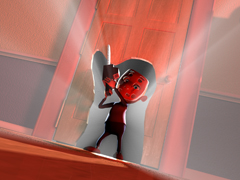
DPA CPCS 860 Digital Production Group Film is a collaborative effort that stresses team work and mimicks the studio environment in terms of film production. Students are designated specific job titles like Lead Animator, Modeler, Texture artist, Rigger, etc. These leads then delegate responsibilities throughout the entire team. It's not uncommon for some students to wear many hats as the teams fluctuate in size. This year's productions include "Cereal Killer" a 2 minute film about a boy who encounters a "bizarre" cereal box. This project had a 12 month cycle, where the main character was developed with a motivation and backstory. We then proceeded into the story board stage where the traditional story arc is identified and developed into a fleshed out story reel. Cinematic language of staging, design, lighting and mood are all explored. It's critical that the timing and shot to shot flow is developed and fully worked out at this stage. After the reel is complete, blocking and rough animation is tackled until we reach the final stage of lighting, texturing and audio. The score and foley can be just as challenging as the timing and character development of animation. In the end, all the students develop an appreciation for the full cycle of digital production and as a reward, they also have a film that is exhibition worthy and will have a life long after they graduate.
|
|
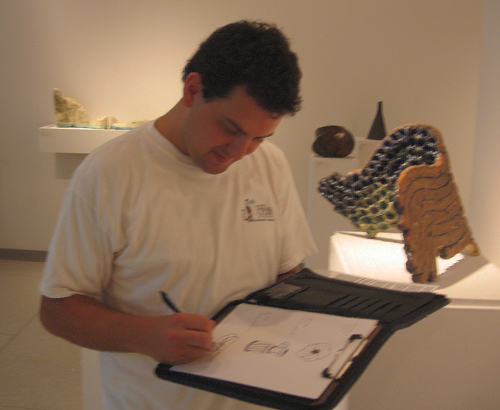
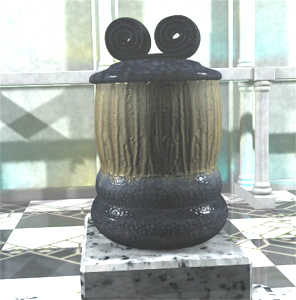
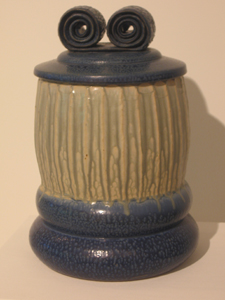
CPCS 807 Intro to 3D animation/modeling/lighting1st year students are given "boot" camp into the ins and outs of Maya or 3D graphics. I want them to learn it at a real world platform...meaning it's better to reference from real life instead of just turning on the computer and pressing a bunch of buttons. During this semester we had the real fortune of experiencing a gallery exhibit of Ceramic Artist Val Cushing from Alfred University in upstate New York. Val's ceramic pieces conjured up some great character possibilities, but also shed insight to wonderful textures, lighting, volume and shape. So off my students went with photos and sketch books. We explored Val's work and went back to the computer lab to extract some new pieces of our own. Afterwards, I wanted the students to tell a story from these peices. I stress that film making needs to be introduced at the entry level. Students must be comfortable with editing and timing before they proceed at the higher level of animation and film making.
|
|
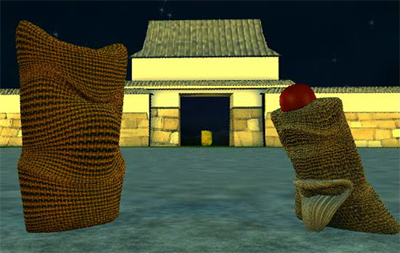
CPCS 808 3D animationStudents are introduced to the "fundamentals" of animation. Regardless of computers or technology, these animation principals are the foundation off ALL animation. Timing, weight, squash/stretch, posing, and character are explored at the basic level. I feel if students can make a ball bounce with all the essential elements, then a human walk can be achieved. Most students want to bypass this and go right into complexity, but they fail to understand that it's the basics that take a life time to understand. Most of the talented animators understand this...even if it's at a intuitive level. |
 |
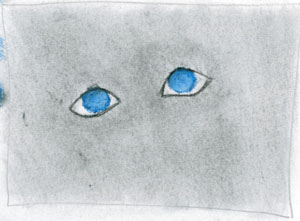
ARTC 321 Art with ComputersThis course is designed to introduce artist to the computer as a new medium. Along with the latest digital methodology they are introduced into time based medium. The computer is simply another device or tool to help the students express themselves into a new realm. Photoshop introduces the students into digital print medium and then Flash is incorporated to utilize the visual into time. One theme that is explored is the self portrait where the artist deviates from the traditional figurative to a transition of form and color. |
  |
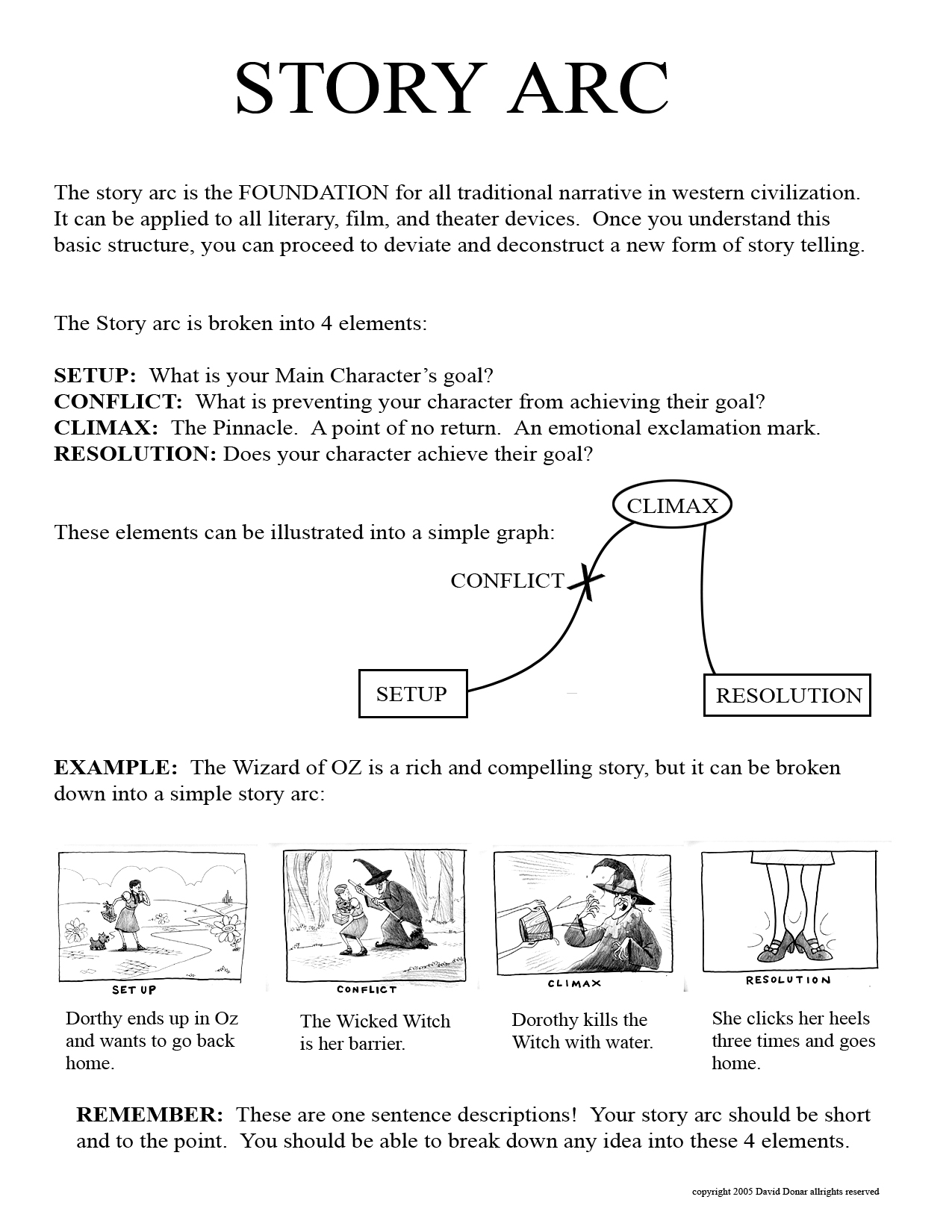
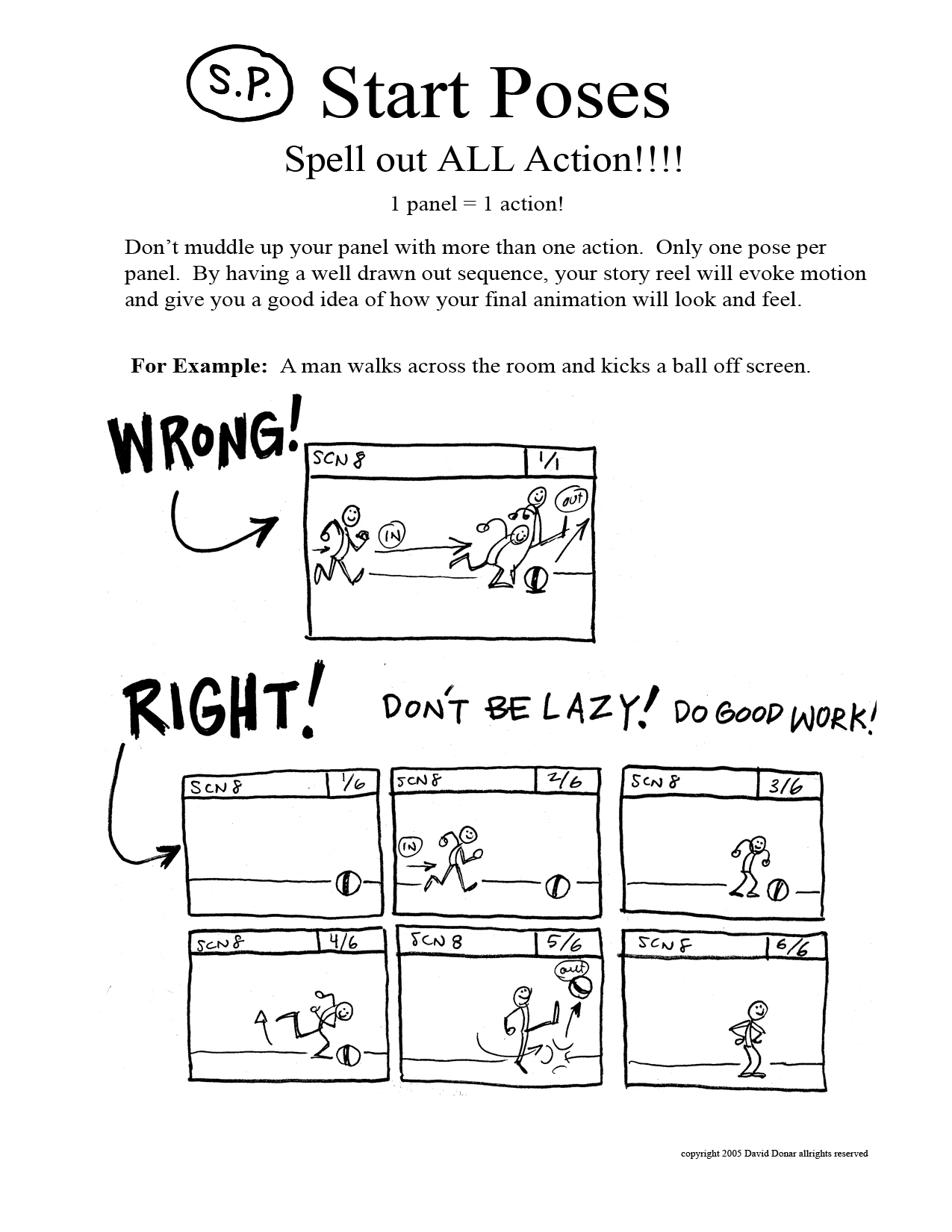
HANDOUTSHere are some helpful storyboard handouts that I have found useful in terms of drawing out a traditional story arc, basic conflict buildup, and hookup and start poses. These are just a building block. |
    |