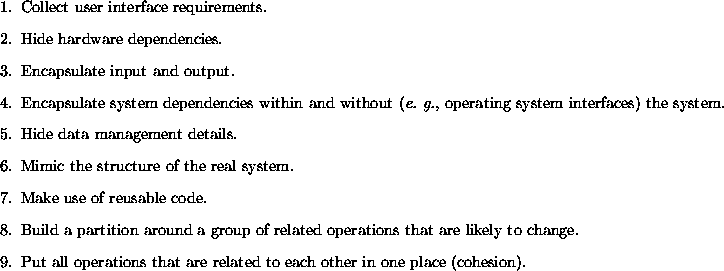
One principle of design is called information hiding. Years of programming experience has shown that programmers have a tendency to take advantage of what the they know about the internals of the system. This might be fine if nothing ever changed. But the reality is that software is constantly changing. Therefore, we do not want to expose ourselves to having others think they know how something is done. We want others to use exactly those features that we all agree are immutable without some formal agreement. The term module has come to mean a collection of data and routines that also provides for some form of security. Data or routines available to anyone (inside or) outside the module is classified as public. Data and routines that are available to only those inside the module are called private. Public data and routines are often said to be exported. Collectively, all these concepts are termed information hiding. This disciplined way of doing things has several advantages: